


Your first government building tender starts with a licence
The first thing to check on a government building job is your QBCC licence class, not company size. Here's how a regional builder starts.
← All insights · By Helm Intelligence · 13 November 2026 · Strategy
The builder in this story works out of Emerald, employs about a dozen people and hasn't priced a government job yet. They're a composite of owners we talk to across Central Queensland. Ten years of sheds, medical clinics and shop fit-outs, a good name in town, and the same doubt every time a government job comes up: "we're too small for that."
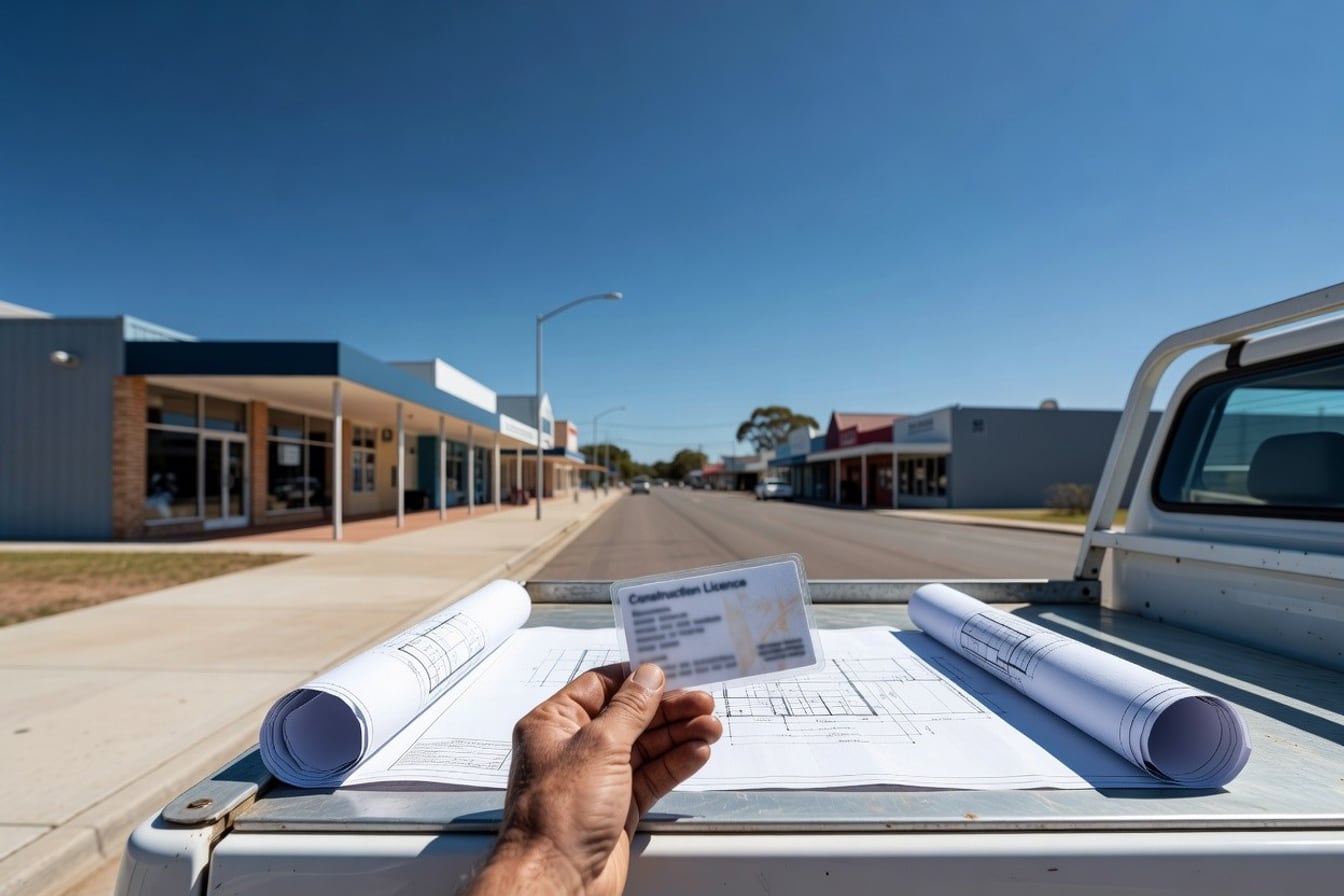
On a government building job, the first thing to check isn't turnover, staff numbers or a list of past government contracts. It's your builder licence class against what the tender conditions ask for.
The gate is a licence, not your headcount

The Queensland Building and Construction Commission (QBCC) sets the builder licence classes. Its Medium Rise class covers building work up to three storeys.
So start with the licence. Look your business up on the QBCC register and check the class against the tender conditions. If it matches, you can price the job. If it doesn't, you've saved yourself, say, a fortnight of estimating on something you couldn't lodge.
A government building tender doesn't ask whether you're big. It asks whether you hold the right licence for the work, whether you can deliver it, and whether you can prove both.
Design-and-construct means you price the design

When a job comes out as design-and-construct, most of the work sits in those words. You're not pricing someone else's drawings. You're carrying the design, so the risk of getting it wrong lands on you too. A builder who prices it like a construct-only job puts a margin on the build and nothing on the design.
Before you open the estimate:
- Line up an architect or building designer who will commit to the job, and get their fee in writing.
- Agree with them how design risk is shared, then read the tender conditions for the insurance they ask for.
- Price the plant room and building services with the engineers who will design and certify them, not from a rate you used on a shed.
- Read the scope twice and write down every assumption you made. Each one is either a clarification question for the buyer or a line of risk in your number.
Then read the evaluation rules. That's where the policy shows up, and where the response needs more than a price.
Where Queensland Procurement Policy 2026 shows up
The Queensland Procurement Policy 2026 started on 1 January 2026, as law firm McCullough Robertson reported in its summary of the change. Business Queensland's supplier guide sets out what it means for the businesses selling to government.
For routine procurement, buyers must invite at least one local supplier, small and family business, or Queensland regional business, unless that's impractical. For what the policy calls significant procurement, each agency sets its own threshold, no lower than $500,000 including GST, and purposeful outcomes carry a combined maximum of 10 to 20 per cent of the evaluation, with each chosen outcome weighted at 5 to 10 per cent.
Being the builder up the road gets you started. It doesn't decide the job. A weighting is a share of the score, and you earn it with evidence. Write yours down now, before there's a closing date:
- The local subcontractors on your last three jobs, by name, with the value of work each one did.
- The apprentices you've trained, and where they're working now.
- The accounts you run with businesses in town: the hardware, the concrete plant, the electrician.
- What you would commit to on this job, in numbers you can report against.
Each one becomes a line in a response, with a name and a number behind it. A local claim without them reads like every other tenderer's local claim.
Finding the job in time
In practice, the hard part is finding the job in time, because a design-and-construct price needs every week you can get: a designer to brief, engineers to quote, subcontractors to ring, evidence to gather.
Register on the Queensland eTender portal before you need it, not the night before close. Then decide how you'll hear about the next job, because checking a portal by hand between site visits is the step that slips first.
Helm Tender puts Queensland Government tenders, refreshed every two hours, into one feed with Brisbane City Council and federal tenders, and on the Tracker plan it emails you a daily digest of the ones that fit your business, each with an itemised 0 to 100 score showing every point added or taken off (a measure of fit, not a prediction). You can watch a buyer and get reminders 7, 3 and 1 days before close, and the Ready Room checks your licence, insurance and policy documents against your library, with their expiry and review dates. You can do the searching, watching and date-keeping by hand on the portal, or have it done for you, and either way you write, own and submit the bid.
See which tenders fit your business at https://helmtender.com.au/?utm_source=web&utm_medium=insights&utm_campaign=helm-tender
If you build in the bush and passed on the last government building job, we'd like to know what stopped you: the design side, the paperwork, or hearing about it too late. A person reads hello@https://helmtender.com.au/?utm_source=web&utm_medium=insights&utm_campaign=helm-tender.
Questions this raises
Sources
Join the conversation on LinkedIn →


#Queensland Government tenders#Regional Queensland#First-time tenderers#Tender preparation