



Brisbane 2032: which of the three buyers buys your work
Sponsorship pays the Games. Supply goes through GIICA, DSDIP or the Organising Committee. Find your buyer before you register.
← All insights · By Helm Intelligence · 2 November 2026 · Ready
Sponsorship money goes to the Games. Supply money comes from the Games. They're different deals.
Two owners, both illustrative, though you'll recognise them. One runs a concrete subcontracting business in Logan. He reads every partner announcement, sees CommBank named Founding Partner and Official Bank of Brisbane 2032, and decides the sponsor side is where the Games relationships start. The other runs a catering business on the Sunshine Coast. She checks QTenders over breakfast every day, watches venue packages come and go, and can't work out why none of them fit.
Both are doing the work, and neither has walked up to the right buyer. The fix is different for each of them, because Brisbane 2032 doesn't have one buyer. It has three, and the sponsorship program isn't one of them.
Sponsorship is a revenue deal, not a supply route
The Brisbane 2032 supplier portal, run by ICN (the Industry Capability Network), lists CommBank as Founding Partner and Official Bank of Brisbane 2032. That's a sponsorship role, and it sits apart from the procurement categories.
Supply runs the other way. The Games, or the bodies building for them, pay you. That goes through procurement: registration, an Expression of Interest or a tender, evaluation, then a contract. The Organising Committee's own Gateway project page draws the line the same way: partners invest significantly in the Games, while suppliers provide goods or services through procurement.
The way in is the same portal, though. The Organising Committee asks businesses interested in partnership to register on Gateway by ICN and answer the relevant questions when suitable Work Packages are published, and not every package offers partnership. If you want to be paid to supply, keep reading.
The three buyers and what each one buys
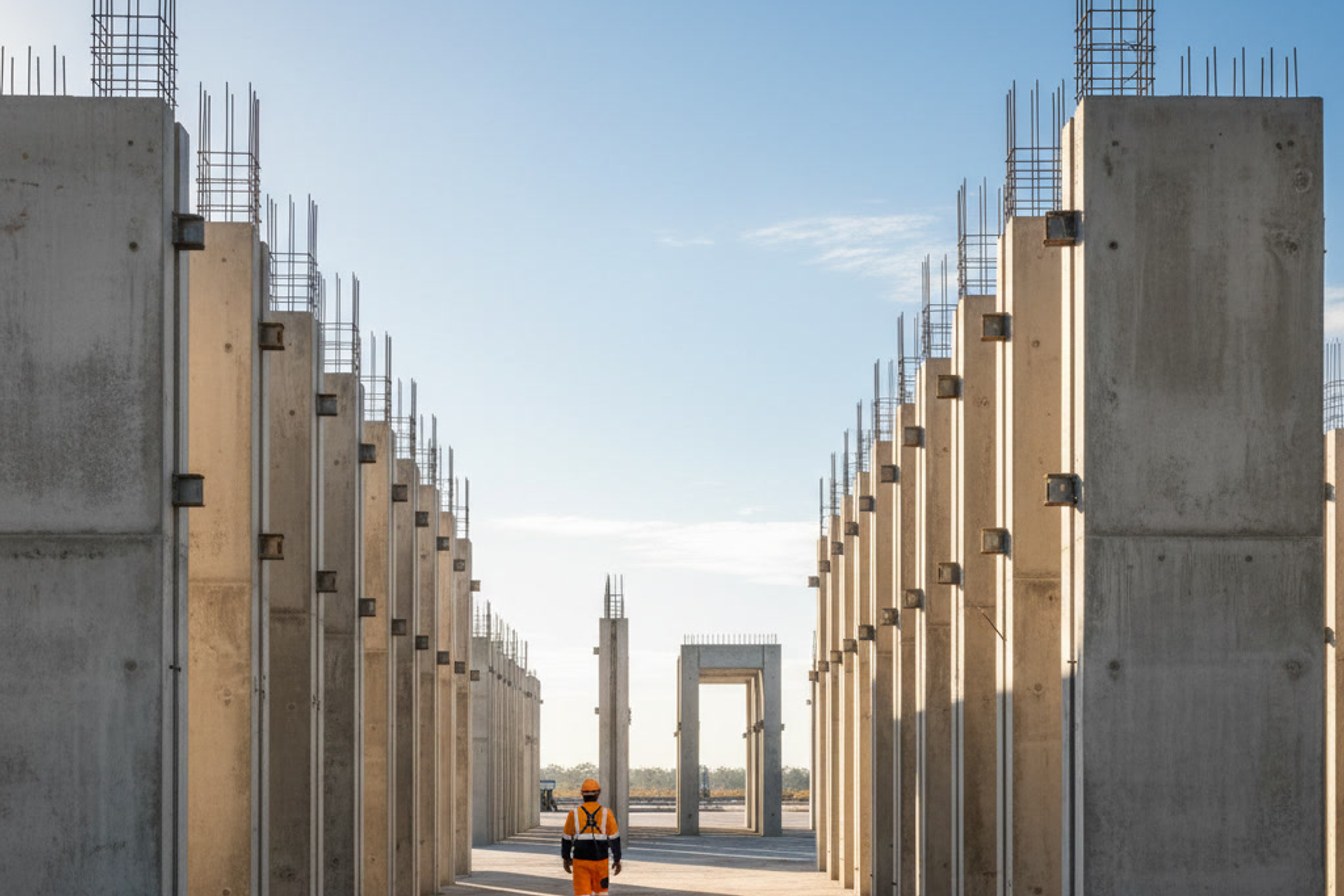
business.gov.au sets out three separate procurement bodies for Brisbane 2032. ICN's Brisbane 2032 portal describes the same split.
- GIICA delivers the venues. Its own procurement page says it promotes tender opportunities on QTenders, the Queensland Procurement Portal.
- DSDIP runs the Games Villages Program.
- The Brisbane 2032 Organising Committee buys event coordination, temporary infrastructure and venue operations.
The lines between them matter more than they look. GIICA's procurement page says plainly that the Organising Committee runs its own, separate supplier portal. A business that only watches QTenders mostly sees the venue builds and misses the event side. A business that only watches the Organising Committee mostly sees the event side and misses the venues.
Village work sits with DSDIP. How that work is packaged, and how it reaches subcontractors, is something to confirm with DSDIP directly before you build a plan around it.
How the Organising Committee buys: Gateway by ICN
The Organising Committee's supplier portal runs on Gateway by ICN. GIICA calls it the Organising Committee's Games Supplier Procurement Portal, and it's built for exactly this job.
business.gov.au lays out the path. You register on Gateway by ICN and answer an Expression of Interest. If you make the shortlist, you move to a closed tender that includes pitching in person. Registration is free, though a free profile isn't publicly listed.
business.gov.au also says the Organising Committee wants to engage small and medium businesses, women-owned businesses and regional businesses, among others. That describes the Sunshine Coast caterer. It also describes a lot of businesses that assume the Games are for someone bigger.
One part of ICN most owners haven't clocked yet is the partial scope path. You register for the part of a package you can deliver, and ICN shares those details with the businesses that win the head contract. Whether a head contractor calls is up to them, which is exactly why the profile needs to be good.
Work out your buyer first, then register
In practice, the order matters more than the effort. Registering everywhere with one generic profile doesn't put you in front of any one buyer. A profile that says "we do everything" reads like a business that hasn't worked out what it does.
Do it in this order:
- Name what you sell in the buyer's words. Not "hospitality solutions" but catering for crews, volunteers and spectators. Not "civil works" but formwork, pours and finishing on structural concrete.
- Match it to the buyer. Permanent venue construction sits with GIICA and shows up on QTenders. Event coordination, temporary infrastructure and venue operations sit with the Organising Committee, through Gateway by ICN. The Games Villages sit with DSDIP.
- Register where that buyer buys, and write the profile for that buyer. Capability, past work of a similar size, locations, capacity, certifications. Specific beats broad every time.
- Add a second buyer only if your work genuinely spans two. Then write a second profile that fits the second buyer.
Run the two owners through it. Most of the caterer's work sits with the Organising Committee, so her ICN profile will do more for her than any QTenders habit. Like the subcontractor, she confirms the split with each buyer before she plans around it. The concrete subcontractor has two lines to follow. Permanent venue work comes through GIICA on QTenders, and through the head contractors who win those packages. Temporary infrastructure sits with the Organising Committee. If he wants village work, that conversation starts with DSDIP.
The same logic holds well beyond food and concrete. Venue operations sit with the Organising Committee, so a cleaning contractor or a security company whose work happens at the venues during the Games should start with Gateway by ICN, not QTenders. An engineering or project management firm looking at the permanent builds belongs on the GIICA side.
The cost of the wrong door isn't only the tender you never saw. It's the months of checking the wrong portal, the profile written for nobody in particular, and the Expression of Interest that closed while you were watching somewhere else. Every one of those costs a small business real hours, and none of them shows up until it's too late to fix.
Where Helm Tender fits
Register with ICN first if the Organising Committee buys what you do. Nothing replaces that profile. For the QTenders side, you can check by hand every morning, or have Helm Tender do it: it refreshes Queensland Government tenders every two hours and sends the ones that fit in a digest, each scored 0 to 100 against what your business actually does, with every point added or taken off labelled. You can watch GIICA as a buyer and get an email when it publishes, and if you're shortlisted for a closed tender that Helm Tender doesn't index, paste it in and it becomes a workspace with the same scoring and deadline reminders at 7, 3 and 1 days before close.
Set up your own digest at https://helmtender.com.au/?utm_source=web&utm_medium=insights&utm_campaign=helm-tender
Which of the three buys your kind of work, and which one have you actually registered with?
Questions this raises
Sources
Join the conversation on LinkedIn →

#Brisbane 2032#Supplier registration#QTenders#Gateway by ICN#Queensland procurement#Small business tendering