



An AusTender notice isn't the brief. Read the conditions first
The title, category and notice type only point you somewhere. The conditions for participation decide whether a federal notice fits your business.
← All insights · By Helm Intelligence · 12 October 2026 · Strategy
Helm Insights19 articlesSurface water, the NSW Border Rivers catchment, a Commonwealth buyer. On the listing, it looks like work for an environmental consultancy.
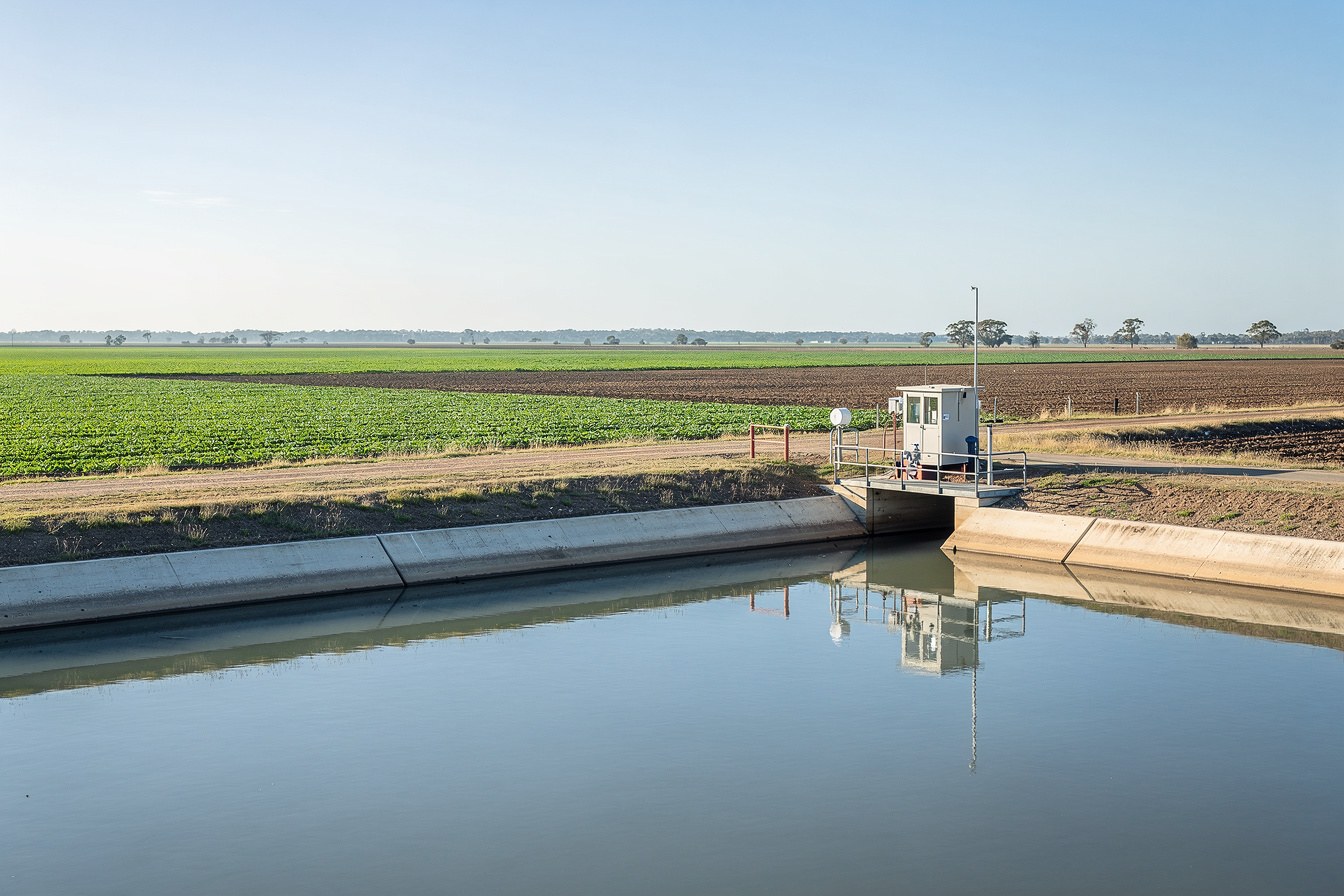
The firm in this story is made up for illustration, a small environmental practice in Goondiwindi. The notice is real. The director sees the title, the category is close enough to what her team does, and AusTender invites her to read further. So she reads further. The notice itself says the Department of Climate Change, Energy, the Environment and Water (DCCEEW) is seeking to purchase surface water from the NSW Border Rivers. It isn't asking anyone to supply a service.
The director's afternoon went on a notice her business could never answer.
That's the extreme case. Smaller versions of it happen every week, in every category.
The listing points you somewhere. It doesn't tell you what's being bought
An AusTender notice gives you a title, a category, a notice type, an agency and a close date. Each is a pointer. None of them is the brief.
Here's what happens in practice. An IT firm sees a request for information in its category and starts building a price. A security and cleaning company sees a facilities notice from a department it has never worked for and skips it on that basis. A training provider sees its category code and assumes the scope matches its courses. All three are acting on the listing. All three may be wrong, in different directions.
The cost isn't only the lost afternoon. It's the notice you didn't open because you were busy with the wrong one. For a ten-person business with no bid team, the director's time is the bid team, and every hour spent qualifying the wrong notice comes straight out of the next real one.
An RFI and an RFT are different decisions
The notice type matters more than most owners give it credit for. ITLawCo describes a request for information as market research that doesn't lead directly to a contract. Proof Communications describes a request for tender as "a series of documents including the scope of works, draft contract and response schedules", while an expression of interest is there to "gauge the market" and rarely asks about pricing.
So the IT firm pricing an RFI is doing RFT work on an RFI question. Whether to answer an RFI at all is a separate call, made on your own grounds: the time it takes, what you learn about the requirement, whether the subject is core to your business. Make that call deliberately. Don't slide into it because the category matched.
An RFT comes with the scope of works, a draft contract and response schedules. That's exactly why the fit decision has to come before anyone opens a pricing spreadsheet, and why it has to come from the documents rather than the listing.
What the Commonwealth Procurement Rules say about fit
The Department of Finance publishes the Commonwealth Procurement Rules, and the 17 November 2025 edition is plain about where the real test sits. Conditions for participation may only cover a supplier's legal, commercial, technical and financial ability to fulfil the procurement. The agency must judge suppliers only on the conditions it has stated.
Three more lines in the Rules matter to any business new to federal work:
- Conditions must not require previous experience with that agency.
- They must not require previous experience with the Australian Government, or in a particular location.
- Relevant prior experience can be required only where it's essential to meeting the requirement.
That changes the security and cleaning company's decision. Never having worked for that department isn't, on its own, a reason to walk away. The question is whether the business can meet the conditions the agency has actually written down, with evidence.
The Rules also say where those conditions live. The request documentation has to fully describe the conditions for participation and the documents suppliers must submit. The listing is the summary. The request documentation is the test.
How to qualify a federal notice before anyone prices it
The process is short. It just has to happen in the right order.
- Register on AusTender. Registration is free, and registered users can download tender documents, receive notice of changes and lodge responses.
- Download the full pack, then read the conditions for participation before anything else. Not the scope summary, not the pricing schedule. The conditions.
- List the documents the request says you must submit, and check them against what your business holds today. Certificates, insurances, policies, referees. If one of them doesn't exist yet, you'll know now rather than on the Sunday night before close.
- Keep watching after you download. Once you download the documents, you're emailed whenever the notice changes. Treat every one of those emails as a reason to re-check your fit decision.
Once the pack is open, three questions settle most notices:
- Is it asking us to supply anything at all?
- Is it asking for an offer, or for information?
- Can we meet every stated condition with the evidence we hold today?
If the answer to the first is no, you're done in five minutes, like the Goondiwindi director should have been. If it's an RFI, you're making a time decision, not a bid decision. If you can meet every condition, you have a notice worth pricing. If you can't meet one, that's your answer too, and it's a cheaper answer now than after a week of writing.
Nobody reads a full pack for every notice in their category. That's the point of a first pass. It sorts the notices worth downloading from the ones that only look close, so the full read goes where it counts.
The listing got the Goondiwindi director to open the notice. The documents told her what it was. Build your process so the documents get read first, by whoever does the first pass, and the listing is only ever the thing that points you there.
Doing the first pass every morning
You can run that first pass by hand on every federal notice, or have it done for you each morning. Helm Tender puts federal tenders into the same digest as Queensland Government and Brisbane City Council work, and gives each one an itemised score from 0 to 100 with every add and subtract labelled, so you can see why a notice scored low before anyone spends an afternoon on it. It won't tell you you're eligible, because that call comes from the conditions and it's yours to make. If a notice isn't in the feed, paste it in and it becomes a workspace with the same scoring, plus reminders 7, 3 and 1 days before close.
See which tenders fit your business at https://helmtender.com.au/?utm_source=web&utm_medium=insights&utm_campaign=helm-tender
Questions this raises
Sources
- Commonwealth Procurement Rules (17 November 2025), Department of Finance
- Commonwealth Procurement Rules notes, AustLII
- Become a registered user, AusTender help
- AusTender help list
- Using AusTender, Selling to Government FAQ, Department of Finance
- NSW Border Rivers and Namoi strategic water purchase, Waterfind
- RFx explained: RFPs, RFQs, RFIs, RFTs and more, ITLawCo
- EOI, RFP, RFT, RFQ and bids, Proof Communications
Join the conversation on LinkedIn →

#AusTender#Commonwealth Procurement Rules#Conditions for participation#Tender qualification#Federal tenders