


Venue tenders are the small end of the Queensland build
Games venues get the photographs. The larger share of the state build sits elsewhere, and most of it is published before anything is advertised.
← All insights · By Helm Intelligence · 28 September 2026 · Pipeline
Helm Insights11 articlesHer diary has a note for the month she thinks Brisbane 2032 venue packages get advertised. Until then, the owner of a workforce training provider in Central Queensland is doing nothing about the Games. She has read every article going, and every one was about stadiums. None of it was about her.
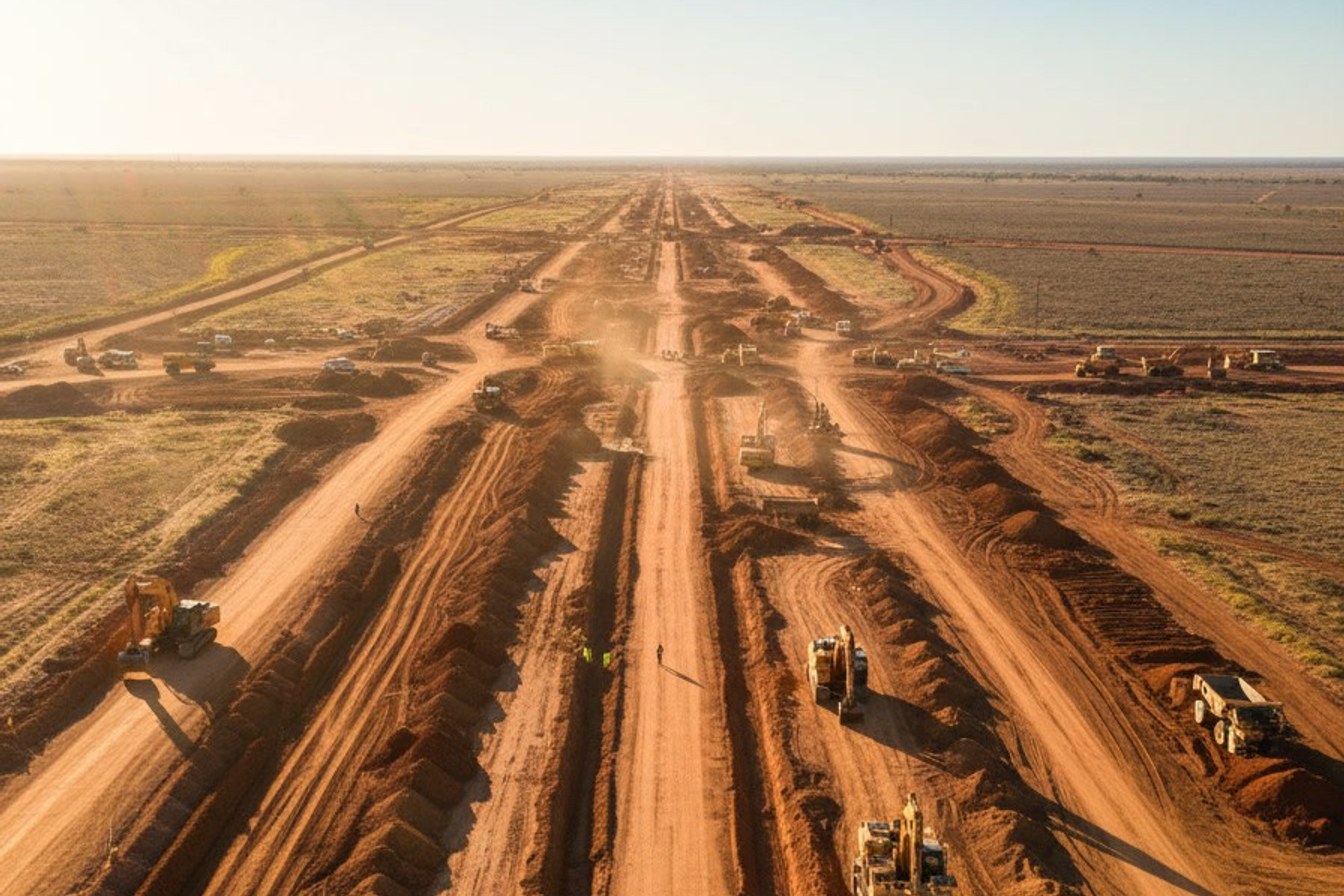
Meanwhile the state capital program keeps moving through transport, health, water and energy work. A lot of it sits outside Brisbane. A lot of it has nothing to do with the Games calendar. Venue infrastructure is a defined and comparatively small part of the state build. It just gets the photographs.
That is the first thing worth correcting. If you are waiting for a venue notice, you are watching the small end of the program, and you are watching it late.
What gets published before a tender exists
Two documents do most of the work here, and both are public.
The first is the state budget capital statement. It sets out the capital program across four years by portfolio and by region, which means the shape of the spend is on the record long before individual packages are advertised. It is not a tender list. It is a statement of intent, and intent is what you position against.
The second is the consolidated forward procurement pipeline that Queensland publishes as an open dataset on its open data portal. It is organised across spend categories with a lead agency named against each line. That structure matters more than most owners realise. It tells you which part of government owns the category you sell into, which is the question almost nobody can answer about their own market.
Add the regional picture from the budget papers and you get something useful for a business that is not in Brisbane. The majority of budgeted capital expenditure sits outside the south east corner. For a training provider in Rockhampton, a plant hire business in Townsville or a security contractor in Cairns, that is the part of the story the Games coverage never covers.
The constraint is suppliers, not projects

The independent audit reporting on major projects is blunter than any of it. What limits delivery is workforce and market capacity. Not a shortage of work to be done.
Read that alongside the pipeline and the implication for a supplier is not subtle. Buyers and head contractors are not short of projects. They are short of suppliers they already know can deliver, who are already registered, already prequalified where prequalification applies, and already have someone at the buyer's end who can put a name to the business.
By the time a notice appears with a short close, the registration, the prequalification and the delivery evidence are either done or they are not. Three weeks does not fix it. That is the real cost of a late find, and it is not the cost of losing a bid, it is the cost of never being in a position to write one.
What early positioning actually looks like
It is less exotic than it sounds, and it varies by what you sell.
- An ICT or cyber firm works out which agency owns the category it sells into, reads what that agency has bought recently and who won it, and asks for a capability briefing while the requirement is still being scoped rather than after it is written.
- A cleaning, security or grounds contractor goes after the panels and standing offer arrangements that agencies use when they do not want to run a full open process. Panel refreshes are advertised. Contract end dates on existing arrangements are a matter of public record.
- A caterer or accommodation provider talks to the venue and event operators in its region about volume, dietary compliance and staffing depth, because in those categories the buying often sits with an operator, not with a department.
- A training provider talks to the contractors who will need inducted, ticketed people in her region, rather than waiting for a government advertisement addressed to her.
None of that requires a bid team. It requires knowing which buyer is which, and starting the conversation in the quarter before the requirement is written rather than the week after it is advertised.
One step this week
ICN Queensland (the Industry Capability Network) runs the Brisbane 2032 supplier portal. Registration is free.
The smartest thing on it is the partial scope path. You register for the part of a package you can actually deliver, not the whole package, and ICN shares those details with the businesses that win the head contract. A ten-person signage firm, a translation service, a uniform supplier and a waste contractor all have a real entry there, and none of them needs to pretend to be a head contractor to use it.
Whether a head contractor calls is entirely up to them. That is exactly why the profile needs to be good: capability described in the buyer's language, certifications current, referees who will answer the phone, and the regions you genuinely cover rather than the ones you would like to cover.
Do that this week. It takes an afternoon, and it is the single step most owners reading Games coverage have not taken.
Then there is the reading
Positioning early only works if you keep reading. That means the forward pipeline, the capital statement, the buyer's award history and the end dates on the contracts you want next. Most owners will do that once, in a burst of enthusiasm, and then not again for eight months.
Helm Tender shows forward procurement signals before a tender exists, quoted from the agencies' own published plans, alongside what that buyer has awarded before and who won it. You can watch a buyer, a panel or a contract end date and be emailed when something moves. An end date is a fact and that is all it is, and a match score is never a prediction about who wins anything. What it does give you is a defensible answer to where the next six months of business development should go, arriving in a morning briefing instead of a browser tab you keep meaning to open.
See the tenders your competitors are already tracking at https://helmtender.com.au/?utm_source=web&utm_medium=insights&utm_campaign=helm-tender
The part most owners have not clocked yet
The Games are a deadline attached to a building program that was already running and will keep running. The categories that carry the most spend are the ones that never make the news: transport, health, water, energy, and every service that sits under them. Cleaning. Security. Traffic control. Workforce supply. Fleet. Waste. Translation. Signage. Accommodation.
If your business fits any of those, the useful question is not when the venue tenders drop. It is which agency buys what you sell, what they bought last time, who won it, and when that arrangement ends.
That information is published. The businesses that read it early are the ones with a relationship in place when a package reaches market. Everyone else finds out in an email with a short close, and writes the bid anyway, and wonders why the incumbent keeps winning.
Questions this raises
Sources
- Queensland Budget Paper No. 3, Capital Statement 2026-27
- Queensland Government statement on the state capital program
- Queensland Government statement on Games venue infrastructure
- Major projects report to parliament, 2025
- Forward procurement pipeline dataset, Queensland open data portal
- Commonwealth media release on 2032 Games infrastructure funding
Join the conversation on LinkedIn →

#Brisbane 2032#forward procurement pipeline#Queensland government tenders#supplier registration#regional business#bid strategy